Thursday, January 22, 2015

Wrapping it Up

Aim: How do we evaluate our learning this semester? 

Reflection: What did you learn this semester about yourself as a learner? What did you learn in this class that you will carry with you into the future? What was the high point for you in this class this semester and what was the low point? Are you a better student today than you were at the beginning of the semester? Why or why not? Please put your thoughts into at least two paragraphs. 

Please also complete the course evaluation. There are copies in the classroom and a link below. This will help me improve my teaching for my next crop of students. (Not necessary to put your name on this.)

I hope you learned at least half as much from me as I learned from all of you this semester.
I will miss you.

Carry on,

Ms. Becker


What's due by Friday, January 23, 2015*
  • Independent reading projects
  • EBC worksheets (three)
  • Memoirs!
  • Night thematic essay
  • Daily journal responses (Mark the two responses you think are your best. The ideas and writing components of your grade will be based on the two you choose.)
  • Returned books....................... -50 participation points if unreturned
* If for some reason you need an extended deadline on something, please email me or speak to me privately.

Thursday, January 15, 2015

Generating Our Own Claims Regarding Erdrich's Choices


Aim: How do we analyze the impact of Louise Erdrich's choices regarding how to develop and relate the literary elements of "The Red Convertible"? 

Journal Prompt #18:Life on the "Rez"
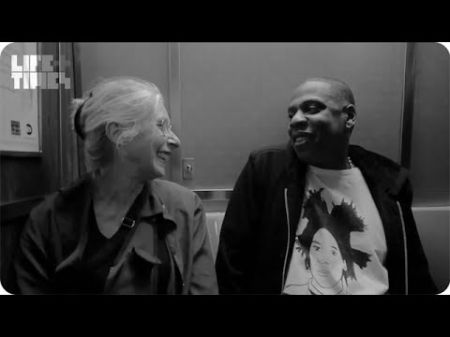
Watch this video by clicking here. Afterwards, write one comment and one DOK #3 question.

By now, you should be pretty comfortable with finding related details that stand out for you in a literary text. When connecting the details, it's important to think about what the details reveal about the author's choices. You should draw inferences about the effects the author's use of details has on your experience as a reader. From that, you should be able to draw a conclusion about the text. For example, one can conclude that Louise Erdrich begins her narrative sparsely, proving only a few puzzling details and shifts tense in the first paragraph, creating mystery and anticipation. It all makes the reader wonder where the story is going.

It's time to generate your own claims! Remember, it's important to think in terms of Erdrich's choices, NOT in terms of the plot itself.

Click here to read "The Red Convertible" by Louise Erdrich.


Working with a partner, complete a "Forming Evidence-Based Claims" worksheet in which you generate your own claim on the text through page 6. We will discuss your claims in class.

Afterward, finish reading the story independently. Consider these guiding questions as you read:

  • What choices do you notice Louise Erdrich making?
  • Where does the narrative end--with what details, events, or thoughts?
  • What seems unexpected, troubling or ironic about the resolution of the narrative?
  • How does the ending change or influence our understanding of the narrative?
When you have completed your reading, use the "Forming EBC Tool" to make a claim and support it with evidence.


What's due:
Memoirs!
Five-paragraph thematic essay on Night. (100 points)
*"Redefining Faith" (3 paragraphs; 48 points)
*Independent reading book

***Always check Engrade for your up-to-the-minute progress in this class.***

Standards:
CCSS.ELA-LITERACY.RL.11-12.1
Cite strong and thorough textual evidence to support analysis of what the text says explicitly as well as inferences drawn from the text, including determining where the text leaves matters uncertain.


Monday, January 5, 2015

Making Evidence-Based Claims

Aim: How do we define and identify evidence-based claims? 

Journal Prompt #12:School Lunch
State a conclusion you have drawn about the school lunch that you would like to share with the rest of us. Explain what specific and relevant details made you draw this conclusion.

We are beginning a new unit on evidence-based claims in the context of literary techniques. Evidence-based claims are much like themes or theses. An evidence-based claim states a conclusion you have come to and that you want others to think about.

There are generally five criteria for evidence-based claims. Check out this criteria checklist by clicking here.

We will be using two texts for this unit:
Click here to read "On the Rainy River" by Tim O'Brien
Click here to read "The Red Convertible" by Louise Erdrich.
We will begin with "The Red Convertible." Independently read to the top of page 4 through: "'Thanks for the extra key,' I'd said.'I'll put it up in your drawer just in case you need it.' He laughed."

Use these two questions to guide your reading:
  • Who is telling the story? How would you characterize the narrator?
  • What do details and language reveal about the point of view of the narrator?
What's due:
* Memoirs!
Five-paragraph thematic essay on Night. (100 points)
*"Redefining Faith" (3 paragraphs; 48 points)
*Independent reading book

***Always check Engrade for your up-to-the-minute progress in this class.***

Standards:
CCSS.ELA-LITERACY.RL.11-12.1
Cite strong and thorough textual evidence to support analysis of what the text says explicitly as well as inferences drawn from the text, including determining where the text leaves matters uncertain.


Friday, December 12, 2014

The Memoir Challenge

Aim: How do we synthesize what we learned from Night to create our own memoirs? 

Journal Prompt #5:Looking Forward
State one skill that you are looking forward to conquering in this class during the third marking period.

Click here to read the memoir assignment.

Click here to review the rubric.

Four years ago, I wrote a memoir called "The Summer of My Life." Click here to read my memoir. 

Memoirs are due Friday, December 19.

What's due:
Five-paragraph thematic essay on Night. (100 points)
*"Redefining Faith" (3 paragraphs; 48 points)
*Loss of Faith worksheet
*Independent reading book.

***Always check Engrade for your up-to-the-minute progress in this class.***

Standards:
CCSS.ELA-LITERACY.W.11-12.3
Write narratives to develop real or imagined experiences or events using effective technique, well-chosen details, and well-structured event sequences.
CCSS.ELA-LITERACY.W.11-12.3.A
Engage and orient the reader by setting out a problem, situation, or observation and its significance, establishing one or multiple point(s) of view, and introducing a narrator and/or characters; create a smooth progression of experiences or events.
CCSS.ELA-LITERACY.W.11-12.3.B
Use narrative techniques, such as dialogue, pacing, description, reflection, and multiple plot lines, to develop experiences, events, and/or characters.
CCSS.ELA-LITERACY.W.11-12.3.C
Use a variety of techniques to sequence events so that they build on one another to create a coherent whole and build toward a particular tone and outcome (e.g., a sense of mystery, suspense, growth, or resolution).
CCSS.ELA-LITERACY.W.11-12.3.D
Use precise words and phrases, telling details, and sensory language to convey a vivid picture of the experiences, events, setting, and/or characters.
CCSS.ELA-LITERACY.W.11-12.3.E
Provide a conclusion that follows from and reflects on what is experienced, observed, or resolved over the course of the narrative.


Tuesday, December 9, 2014

Creating a Collaborative Poem

Aim: How do we create a collaborative poem? 

Journal Prompt #3: Reflection
State one challenge in this course that you conquered in the second marking period. How did you overcome it? If you can't think of anything, there must be a reason. Explain that reason.

Today we will continue to brainstorm ideas for our memoirs. One good way to get started is to read and interpret "Where I'm From" poems.Click here to read the original "Where I'm From" poem that inspired all the others.

Click here to read the lyrics to Jay-Z's version.

Familiar with The Absolutely True Diary of a Part-Time Indian by Sherman Alexie? Click here for a quick summary. We will create a collaborative poem based on an excerpt from the text.


What's due:
* Five-paragraph thematic essay on Night. (100 points)
*"Redefining Faith" reflection
*Loss of Faith worksheet
*Independent reading book.

***Always check Engrade for your up-to-the-minute progress in this class.***

Monday, December 1, 2014

How to Hit a Grand Slam

 Aim: How do we evaluate what we learned from reading Night?

Journal Prompt #18: Survival
In his preface, Elie Wiesel wrote, "I don't know how I survived; I was weak, rather shy; I did nothing to save myself."
How do you believe he survived?

Elie Wiesel speaks for countless survivors. In this short video (click here) Wiesel says he comes from a "mystical background" that "beautifies language though silence." Remember power tableaus? In your groups, create a power tableau illustrating a short scene from Night. 

To hear other survivors' stories, CLICK RIGHT HERE!!!!!

For the next few days, we will be completing thematic essays, synthesizing important themes and ideas from reading Night.
Click here to view a suggested outline for hitting a grand slam with your thematic essay.
Gisela Glaser

Step 1: Identify your theme/controlling idea. Click here to get the 5-step worksheet to help you zero in on your controlling idea.

Each day you will be asked to complete another significant piece of the essay. Turn in your work each day to get editing suggestions. We will also have individual writing conferences. 

This assignment will be worth 100 project points.

What's due:
*"Redefining Faith" reflection
*Loss of Faith worksheet
*Interpretation of the differing taste of the soup. 
*Group thematic essay. 
*Group thematic essay evaluation.
*Independent reading book.

***Always check Engrade for your up-to-the-minute progress in this class.***