Friday, December 12, 2014

The Memoir Challenge

Aim: How do we synthesize what we learned from Night to create our own memoirs? 

Journal Prompt #5:Looking Forward
State one skill that you are looking forward to conquering in this class during the third marking period.

Click here to read the memoir assignment.

Click here to review the rubric.

Four years ago, I wrote a memoir called "The Summer of My Life." Click here to read my memoir. 

Memoirs are due Friday, December 19.

What's due:
Five-paragraph thematic essay on Night. (100 points)
*"Redefining Faith" (3 paragraphs; 48 points)
*Loss of Faith worksheet
*Independent reading book.

***Always check Engrade for your up-to-the-minute progress in this class.***

Standards:
CCSS.ELA-LITERACY.W.11-12.3
Write narratives to develop real or imagined experiences or events using effective technique, well-chosen details, and well-structured event sequences.
CCSS.ELA-LITERACY.W.11-12.3.A
Engage and orient the reader by setting out a problem, situation, or observation and its significance, establishing one or multiple point(s) of view, and introducing a narrator and/or characters; create a smooth progression of experiences or events.
CCSS.ELA-LITERACY.W.11-12.3.B
Use narrative techniques, such as dialogue, pacing, description, reflection, and multiple plot lines, to develop experiences, events, and/or characters.
CCSS.ELA-LITERACY.W.11-12.3.C
Use a variety of techniques to sequence events so that they build on one another to create a coherent whole and build toward a particular tone and outcome (e.g., a sense of mystery, suspense, growth, or resolution).
CCSS.ELA-LITERACY.W.11-12.3.D
Use precise words and phrases, telling details, and sensory language to convey a vivid picture of the experiences, events, setting, and/or characters.
CCSS.ELA-LITERACY.W.11-12.3.E
Provide a conclusion that follows from and reflects on what is experienced, observed, or resolved over the course of the narrative.


Tuesday, December 9, 2014

Creating a Collaborative Poem

Aim: How do we create a collaborative poem? 

Journal Prompt #3: Reflection
State one challenge in this course that you conquered in the second marking period. How did you overcome it? If you can't think of anything, there must be a reason. Explain that reason.

Today we will continue to brainstorm ideas for our memoirs. One good way to get started is to read and interpret "Where I'm From" poems.Click here to read the original "Where I'm From" poem that inspired all the others.

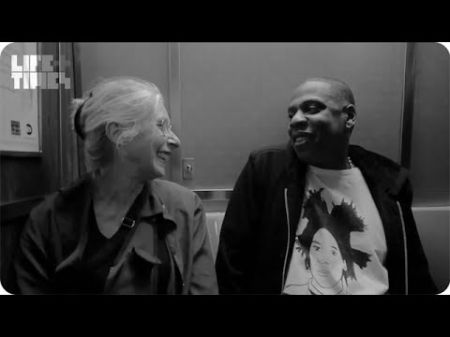
Click here to read the lyrics to Jay-Z's version.

Familiar with The Absolutely True Diary of a Part-Time Indian by Sherman Alexie? Click here for a quick summary. We will create a collaborative poem based on an excerpt from the text.


What's due:
* Five-paragraph thematic essay on Night. (100 points)
*"Redefining Faith" reflection
*Loss of Faith worksheet
*Independent reading book.

***Always check Engrade for your up-to-the-minute progress in this class.***

Monday, December 1, 2014

How to Hit a Grand Slam

 Aim: How do we evaluate what we learned from reading Night?

Journal Prompt #18: Survival
In his preface, Elie Wiesel wrote, "I don't know how I survived; I was weak, rather shy; I did nothing to save myself."
How do you believe he survived?

Elie Wiesel speaks for countless survivors. In this short video (click here) Wiesel says he comes from a "mystical background" that "beautifies language though silence." Remember power tableaus? In your groups, create a power tableau illustrating a short scene from Night. 

To hear other survivors' stories, CLICK RIGHT HERE!!!!!

For the next few days, we will be completing thematic essays, synthesizing important themes and ideas from reading Night.
Click here to view a suggested outline for hitting a grand slam with your thematic essay.
Gisela Glaser

Step 1: Identify your theme/controlling idea. Click here to get the 5-step worksheet to help you zero in on your controlling idea.

Each day you will be asked to complete another significant piece of the essay. Turn in your work each day to get editing suggestions. We will also have individual writing conferences. 

This assignment will be worth 100 project points.

What's due:
*"Redefining Faith" reflection
*Loss of Faith worksheet
*Interpretation of the differing taste of the soup. 
*Group thematic essay. 
*Group thematic essay evaluation.
*Independent reading book.

***Always check Engrade for your up-to-the-minute progress in this class.***

Thursday, November 20, 2014

Redefining Faith

Aim: How do we support our controlling idea with evidence and analysis?

Journal Prompt #14: Evidence and Analysis
Select either the sentence about faith you wrote yesterday or one other sentence from the class' introduction to the "Redefining Faith" reflection. Cite one piece of evidence from Night that supports that statement. Then, explain how the evidence supports that statement.

Click here to read 3rd Period's introduction.

Click here to read 5th Period's introduction.

Yesterday, each class wrote an introductory paragraph for the "Redefining Faith" reflection, which is due tomorrow. You are welcome to use any or all of either paragraphs for your own reflection. Edit and add to them the way you see fit. Just remember that your body paragraph and conclusion should focus like a laser beam on whatever controlling idea is established in the introduction. It's not enough to just cite the evidence. You must consider the "So What?" factor. How does your evidence connect to your controlling idea?

As we reciprocally read today, look for more evidence to support your introductory paragraph.

The three paragraph reflection will count for 48 classwork/homework points. 

What's due:
  • "Redefining Faith" reflection
  • Loss of Faith worksheet
  • Interpretation of the differing taste of the soup. 
  • Group thematic essay. 
  • Group thematic essay evaluation. 
  • Independent reading book.
***Always check Engrade for your up-to-the-minute progress in this class.***

Friday, November 14, 2014

Charting Our Ideas on the Theme of Faith in Night

Aim: How do we analyze what Elie Wiesel is trying to get us to understand about faith?  

Journal Prompt #10: Memorable Moments
What will you remember most about the pages you read in Night this week and why? Re-read the text to job your memory if necessary.

We are diving still deeper into the concept of faith and how this theme is developing in the memoir Night. Today we will work in groups to share our notes and writing from the last two days. Each group will create a chart with these four elements:

  • 1 significant sentence or quote from the text relating to faith
  • 3 questions your group has or things you want to know more about related to the theme of faith.
  • 2 things your group knows for sure about faith
  • 1 guess about what Elie Wiesel is trying to get you to understand about faith.
Put the names of all the group members on the chart. They should all be posted on the wall before the end of class.

What's due:
  • Loss of Faith worksheet
  • Interpretation of the differing taste of the soup. 
  • Group thematic essay. 
  • Group thematic essay evaluation. 
  • Independent reading book.


***Always check Engrade for your up-to-the-minute progress in this class.***

Thursday, November 13, 2014

3-2-1

Aim: How do we analyze what Elie Wiesel is trying to get us to understand in Night

Journal Prompt #9: Wiesel Quote
In the preface to Night, Wiesel describes adolescence as "an age when one's knowledge of death and evil should be limited to what one discovers in literature." YOU are an adolescent. Do you agree with him. Why or why not?

We are diving even deeper into the concept of faith and how this theme is developing in the memoir Night. After today's reading, you will be asked to complete a 3-2-1 on the theme of faith in Night:

  • 3 questions you have or things you want to know more about
  • 2 things you know for sure after reading today
  • 1 guess about what Elie Wiesel is trying to get you to understand.

You will eventually share and chart your work from the last two days with your groups.

What's due:
  • Loss of Faith worksheet
  • Interpretation of the differing taste of the soup. 
  • Group thematic essay. 
  • Group thematic essay evaluation. 
  • Independent reading book.

***Always check Engrade for your up-to-the-minute progress in this class.***

Wednesday, November 12, 2014

The Loss of Faith

Aim: How do we analyze the developing theme of faith in Night

Journal Prompt #7:Faith
What does the word faith mean to you? What causes it? What is its effect? What happens when you don't have any? What about when you have too much? What does it look like? Draw something that shows this if you can.

We are beginning to dive deeper into the concept of faith and how this theme is developing in the memoir Night.


Today we begin reading reciprocally on page 66. As we read, mark with post-its any words, phrases, or sentences that you believe are significantly related to the theme of faith.


After the reading, choose one of these words, phrases or sentences to read out loud in a whip around. No worries if your choice was already read by another.

We will do this again a second time, although this time it will be random order and you should read your words either in the way you think Elie Wiesel wanted it read or the way you think it should be read.

Before you leave today, chart your words and complete the final reflection, writing at least one well-organized paragraph responding to this question: Is the loss of faith a sign of weakness? Why or why not? This reflection should be completed for homework if not completed in class.

What's due:
  • Interpretation of the differing taste of the soup. 
  • Group thematic essay. 
  • Group thematic essay evaluation. 
  • Independent reading book.

***Always check Engrade for your up-to-the-minute progress in this class.***

Friday, October 31, 2014

The Great Group Essay Experiment


Aim: How do we write a group thematic essay? 

Journal Prompt #4:Surprising
Explain one surprising thing you have read so far in Night. Why did you find it surprising?

Someone once said that a camel is a horse designed by a committee. What do you think was meant by that? Well, today we will attempt the essay version of a camel-- a group thematic essay. You will find advantages and disadvantages to this.

Here are the steps to follow:

1. Share your intros with your group by passing your work to the person on your left and reading it silently until everyone has read each group member’s.

2. Vote on which intro to use for your group essay. Student whose intro is chosen becomes the group leader. (Each leader receives five extra credit points.)

3. In your groups discuss two examples (and analysis) from Night that you will use to support your controlling idea as established in the introductory paragraph you chose.

4. Leader assigns those paragraphs. Leader writes the conclusion and organizes all of the paragraphs into one coherent essay.


****Essays must be completed before the end of class. Best essay earns 5 extra credit points for each group member.****

*****Don’t forget: Examples/evidence need analysis as to HOW the example connects to the controlling idea.******


***Always check Engrade for your up-to-the-minute progress in this class.***

Tuesday, October 28, 2014

Dialogic Questions

Elie Wiesel was 15 when he was deported to Auschwitz.
Aim: How do we analyze the development of dehumanization as a theme in Night? 

Journal Prompt #2:Dehumanization
Closely watch this introductory video about Night. Identify at least one theme (ideas) that we have discussed in class and one new theme that we have not yet discussed. State your strong opinion on these ideas.

Open-ended questions are designed to promote dialogue. Another name for open-ended questions are dialogic questions. This week we are exploring the developing theme of dehumanization in Night. As you read today, identify instances of dehumanization in the text. What are the causes? What are its effects? Why do people dehumanize others?

Today we will be working in impromptu groups. After you complete today's reading independently, taking reciprocal notes as you do, join an impromptu group of no more than three students to discuss your reactions. Discuss these two dialogic (open-ended) questions:

1. What did you read today that surprised you?
2. What did you read today that confirmed what you already knew?

After your discussion, write a reflection at least one paragraph long on your impromptu group's discussion. You may include comments about group dynamics.


To read Night at home, click here.

***Always check Engrade for your up-to-the-minute progress in this class.***


Monday, October 27, 2014

Dehumanization as a Theme in Night

Elie Wiesel with his mother Sarah Fieg and two sisters.
Aim: How do we analyze the idea of dehumanization in Night?

Journal Prompt #2:Dehumanization
Closely watch this introductory video about Night. Identify at least one theme (ideas) that we have discussed in class and one new theme that we have not yet discussed. State your strong opinion on these ideas.

This week we will explore the developing theme of dehumanization in Night. The noun suffix ation means the action or process of doing something. The prefix de in this instance means to take away. So the word dehumanization literally means to take away the state of being human.

In impromptu groups today, identify evidence of dehumanization from the text. Analyze how these examples dehumanize people. Discuss these critical questions:

1. Why do people dehumanize?
2. What other instances of dehumanization have you personally seen or read about in history or in the news?

After discussing it with your groups, write a short reflection summarizing your discussion and why you personally learned from the discussion.


Wednesday, October 22, 2014

The End of Denial

Aim: How do we analyze the developing theme of family in Night? 

Journal Prompt#25:Family Free Write
The free write theme is family. Start writing and don't stop until time is called.

Today we are discussing another important T H E M E  in Night and that is family. Check out these quotes related to the theme of family here. Right here. Click here.

Today, we will do a close read of 3.4-10: "Men to the left! Women to the right! ..."

1. Find at least two earlier quotes related to the same theme and explain why they connect.
2. In the same circumstances, would you hold tight to your father or mother's hand? Why or why not?
3. Which should come first? Family or self-preservation? Explain.

Final ReflectionDiscuss these questions in your groups. After your group discussion, write a reflection summarizing your group's discussion and explaining the conclusions you personally drew from it.

After the wrap-up and before you leave class, be sure to complete and turn in the daily Five Elements of Engagement worksheet.

To read Night at home, click here.

Always check Engrade for your up-to-the-minute progress in this class.

Tuesday, October 21, 2014

Fire and Night


Aim: How do we analyze the symbols of fire and night in Night?

Journal Prompt #24: Symbolism
Watch for symbolism in this short clip (4:05) about Dr. Seuss' Sneetches created for children. Generate one question of fact (DOK 1), one question of interpretation (DOK 2) and one open-ended question(DOK 3).

Today we are following up on yesterday's discussion of Symbolism by reciprocally reading Chapter 2 in Night. Each group will be assigned a task during today's reading.

An important symbol in Night is, of course, night. One of the first references to "night" is on page 21. Reread it if you haven't already. Why do you think Elie Wiesel chose to title the book Night? What does night symbolize for him? Does it symbolize the same for you?

Another important symbol in Night is fire. As we read the second chapter, think about what fire usually symbolizes and what it symbolizes in the memoir.

Final Reflection: After your close read of the second chapter of Night, write a reflection explaining how the symbols of fire and night help develop an important theme and deepen your understanding of the memoir.

After the wrap-up and before you leave class, be sure to complete and turn in the daily Five Elements of Engagement worksheet.

To read Night at home, click here.

Always check Engrade for your up-to-the-minute progress in this class.

Monday, October 20, 2014

The Symbolism of Night

Aim: How do we analyze the symbolism of night in Night

Journal Prompt #23:Dreams
Share a recent dream. Did it focus on a particular object or thing? What do you think your subconscious was trying to tell you?

Today we will focus on another important literary device: Symbolism

An important symbol in Night is, of course, night. One of the first references to "night" is on page 21. Reread it. Why do you think Elie Wiesel chose to title the book Night? What does night symbolize for him? Does it symbolize the same for you?

To get you thinking about symbols, complete this worksheet--right here--click here!!!! Choose a symbol for yourself, writing it in the center. Answer all of the questions. When you have answered all the questions, Write It Out as instructed at the bottom, using loose-leaf paper.

After the wrap-up and before you leave class, be sure to complete and turn in the daily Five Elements of Engagement worksheet.


Always check Engrade for your up-to-the-minute progress in this class.

Wednesday, October 8, 2014

Foreshadowing the Unbelievable Terror of Night

Aim: How do we identify the literary device known as foreshadowing and why would an author use it?  

Journal Prompt #15: Watch Out!

Watch this video until 3:35 and STOP. Predict what is going to happen to the boy. List ALL the reasons you think this.


Foreshadowing is a literary device that some authors choose to use to give you hints or clues about what will happen. In the clip from Jaws, the movie foreshadows that the boy will be eaten by a shark with a variety of hints and clues: ominous music, screams, loud laughter, people blocking views, the main character watching the water intently. When they made Jaws, why do you think they chose to use foreshadowing? Why do you think they give us so many hints as to what will happen?

Why do stories use foreshadowing?

When stories give hints and clues about what will happen it can build suspense. It can stretch the moment out longer while you sit and wait for something to happen. It can prepare you for something major to happen. Sometimes, when big events happen in a story, if you’re not properly prepared, the big events can seem like they came out of nowhere, which can bring you out of your involvement in the story. Foreshadowing also involves you more in the story because it compels you to actively predict what will happen next.

Foreshadowing in Night

Reread the first chapter of the memoir. Then answer the Depth of Knowledge (DOK) questions below.

1. What specific details foreshadow the memoir that is about to unfold?  

2. Explain how the foreshadowing affects your understanding of the (true) story to come.

3. Write a reflection based on our discussion what you think was Elie Wiesel's purpose for using the foreshadowing technique/device. In what specific ways does the foreshadowing impact your understanding of the memoir so far?

After the wrap-up and before you leave class, be sure to complete and turn in the daily Five Elements of Engagement worksheet.


Always check Engrade for your up-to-the-minute progress in this class.

Monday, October 6, 2014

Presenting the Five Literary Elements

Aim: How do we identify and analyze the purpose of the five literary elements?  

Journal Prompt #15: Your Favorite

Name your favorite literary element and explain why. (Plot, characterization, setting, theme, point of view.)

There are five literary elements that every work of literature must have. It's part of the structure. Without any one of them, the work would collapse.

Today we will review the five elements, making posters. Each student will be randomly assigned an element. Create a poster that includes 1) the term, 2) the definition, 3) a visual representation, and 4) an example from a movie, book, or story. (Fairy tales always provide great examples.)

Check out this glossary for a quick definition.

You only have 15 minutes to do this. Afterwards, we will have a whip around so you can take notes on the other posters. You will get a chance at the end of class to correct your posters. Your posters and note-taking sheet will be graded. There will be a quiz on the terms later this week.

After the wrap-up and before you leave class, be sure to complete and turn in the daily Five Elements of Engagement worksheet.


Always check Engrade for your up-to-the-minute progress in this class.

Click here to get the Night anticipation guide.

Tuesday, September 30, 2014

Backgrounding the Holocaust

Aim: How do we research answers to our own questions? 

Journal Prompt #10:Research Strategy
Describe your step-by-step plan for researching the answers to the questions that you and your group generated yesterday. If you were not here yesterday, then generate at least one question about the Holocaust using the DOK Question Stem resource.

In preparing to read Night by Elie Wiesel, we are researching the Holocaust. Each student has completed the first two columns of a KWL chart. In groups, students have shared their "W's" and agreed on which questions to research.

When researching, you should always cite at the very minimum two sources for your information. Why do you think this is so?

Today, each group will research their questions and chart their answers. Each chart MUST include these elements:
  • A title or the question.
  • The answer to the question.
  • At least two sources citing where you found the information.
  • Names of group members who participated.
Posters will be graded based on the critical thinking level of the question that is researched as well as the completeness of the answer, creativity, writing conventions, and effort. (See rubric.)

Each group must present their poster at the end of class. Each student is responsible as well for turning in their own completed KWL sheet.

***** Always check Engrade for your up-to-the-minute progress in this class.*****

Standards
CCSS.ELA-LITERACY.RI.11-12.7
Integrate and evaluate multiple sources of information presented in different media or formats (e.g., visually, quantitatively) as well as in words in order to address a question or solve a problem.

Opening an Engrade Account

Aim: How do we evaluate our academic progress?  

Quick Write: Evaluate your progress in this class, supporting your opinion with specific and relevant evidence in a well-organized paragraph.


If you have not already, you should open an Engrade account so that you can monitor your own progress in this class on a 24/7 basis. Engrade is also another option for messaging me. You'll have to get the handout from me with your 4-digit access code. If you are reading this from home, email me and I will email you an invitation to open an account.


To create an account, enter your assigned access code and then choose a username/password combination. Write it down someplace safe! Once you have opened your account, you can use your username and password to log in anytime and anyplace to see your up-to-the-minute classroom information on Engrade and/or to message me or other students in the class.


Your access code is:
Crotonaacademy1-student ID#-four digit code

Write down the code exactly, hyphens included.

For those of you who already opened Engrade accounts in the past, you can sign on with your old username and password. If you forgot your password, Engrade will offer you the option of re-setting it.


Students who already have Engrade accounts might volunteer to help those who are new to this electronic gradebook.


If you missed this class or need a refresher on how to sign up and use Engrade, watch this tutorial.


Required activity: After you have signed on, you will have to send me a message through Engrade to earn your class work points. Explain what if anything is inaccurate and your strategy for using Engrade as a learning tool.